ShiftKey
Led end-to-end product design for ShiftKey’s B2B healthcare staffing marketplace across web and native mobile platforms, optimizing the shift lifecycle from creation through fulfillment. Focused on improving marketplace reliability by reducing friction in high-volume staffing workflows and increasing conversion across critical decision points.
Impact:
- $5M+ net-new revenue impact
- +3% increase in shift-fill rates
- 13% reduction in marketplace cancellations
- First native mobile application launch for healthcare facility administrators
Foundational Context
ShiftKey is a two-sided healthcare staffing marketplace connecting healthcare facilities(B2B Clients) with credentialed professionals(Contractors) to fill open shifts in real time. While the platform successfully enabled marketplace liquidity, the primary challenge was not acquisition—it was execution reliability within the shift lifecycle. Small breakdowns in workflow clarity and decision timing directly impacted fill rates, cancellations, and revenue realization.
Key constraints included:
- Time-sensitive staffing decisions in healthcare environments
- Multi-role marketplace (facility administrators + professionals)
- Complex credentialing and compliance requirements
- Cross-platform experience (web, mobile web, native apps)
- High-impact consequences for missed or delayed shift fulfillment
The core problem was a systemic one:
Improving marketplace performance required redesigning the entire shift lifecycle system, not isolated UI flows.
Role & Ownership
Led product design across the B2B full shift lifecycle, serving as the primary design owner for core marketplace workflows.
Responsibilities included:
- End-to-end UX strategy and interaction design across client web and mobile platforms
- Information architecture for complex multi-role marketplace systems
- Ownership of shift lifecycle experience design (creation → matching → acceptance → fulfillment)
- Collaboration with Product and Engineering leadership on roadmap prioritization and execution
- Translation of operational and compliance constraints into scalable product design solutions
Worked across core system areas including:Shift creation, professional matching, credential validation, contract workflows, acceptance flows, and payment processes.
Key Initiatives
Shift Lifecycle Optimization
Redesigned the end-to-end workflow for shift creation, matching, invitation, and acceptance to reduce friction and improve clarity across high-volume staffing operations.
Optimized for:
- Velocity: Reduced the time and steps required for shift creation.
- Match Quality: Improved data signals for more accurate professional matching.
- Retention: Built features to support "trusted care teams" of preferred contractors.
- Compliance: Clarified eligibility rules to reduce booking friction and drop-off.
- Conversion: Increased overall completion rates across the shift lifecycle.
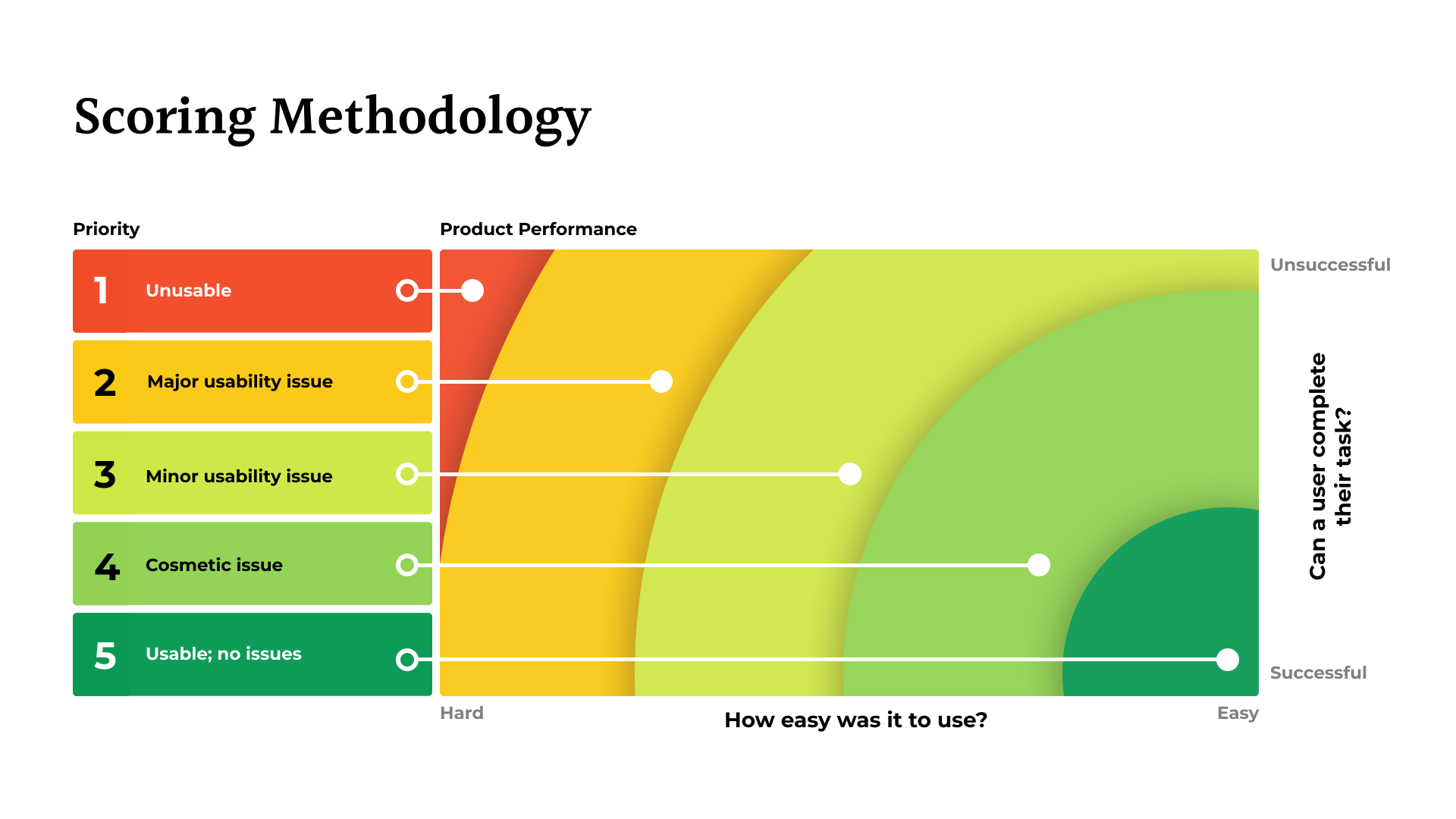
Consistency & Decision Experience
Optimized primary workflows to streamline high-intent decision moments across web and mobile platforms.
Optimized for:
- Cognitive Load: Simplified contract presentation hierarchy for quicker, effortless scanning.
- Transparency: Improved the clarity of compensation details and core requirements to build immediate trust.
- Decision Velocity: Reduced user friction during critical, time-sensitive workflows.
- Omnichannel Consistency: Aligned the experience across web and mobile channels for a seamless, predictable journey.
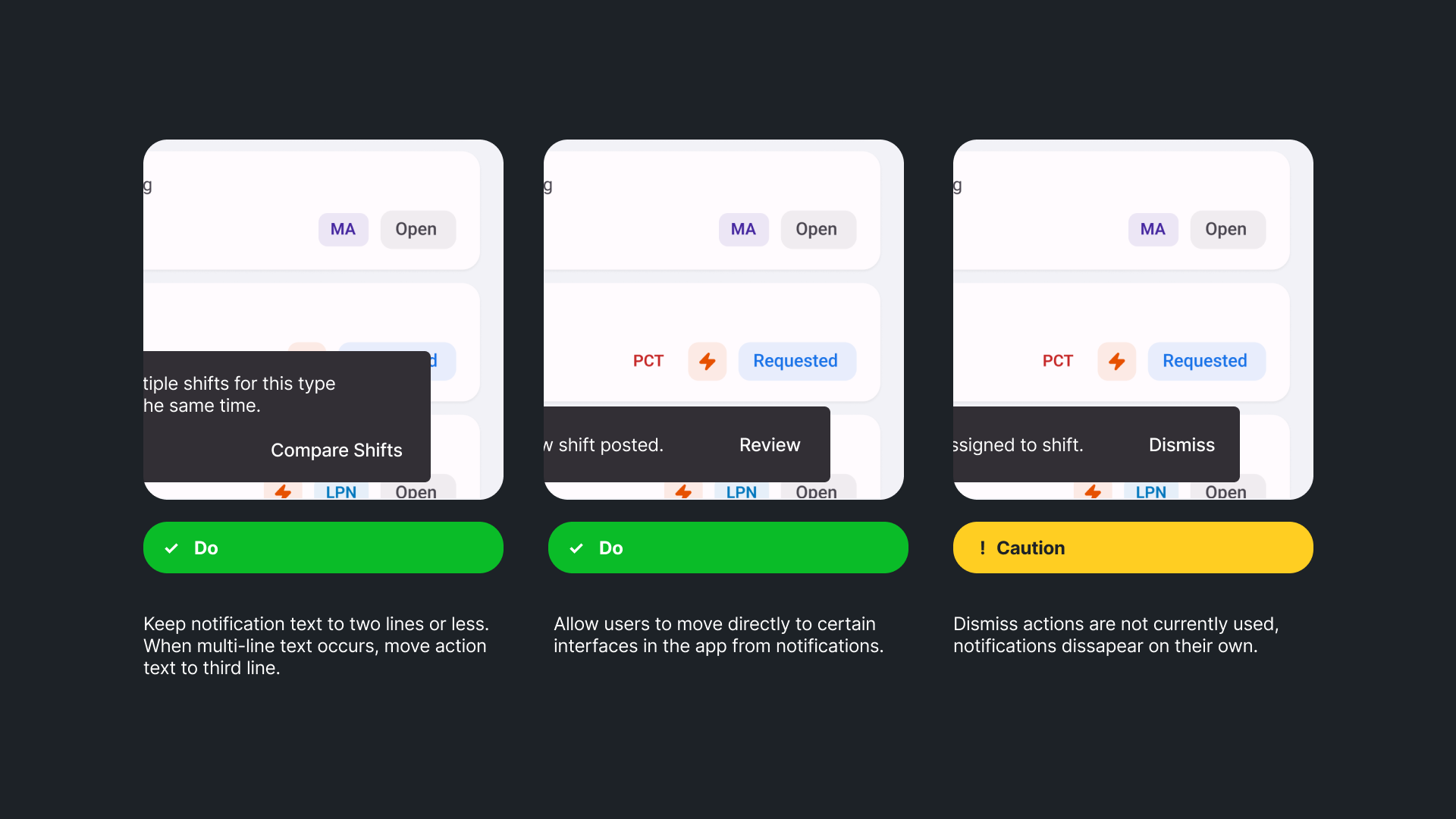
Communication & Notifications
Optimized a cross-channel communication matrix spanning web, email, and mobile notifications to drive user engagement and platform reliability.
Optimized for:
- Fulfillment Rates: Reduced missed shift opportunities by delivering highly targeted, actionable alerts.
- Response Velocity: Accelerated user reaction times to urgent, real-time staffing demands.
- System Visibility: Elevated clarity around live shift statuses, critical system events, and operational updates.
- Marketplace Trust: Strengthened overall platform reliability and mutual accountability between contractors and operators.
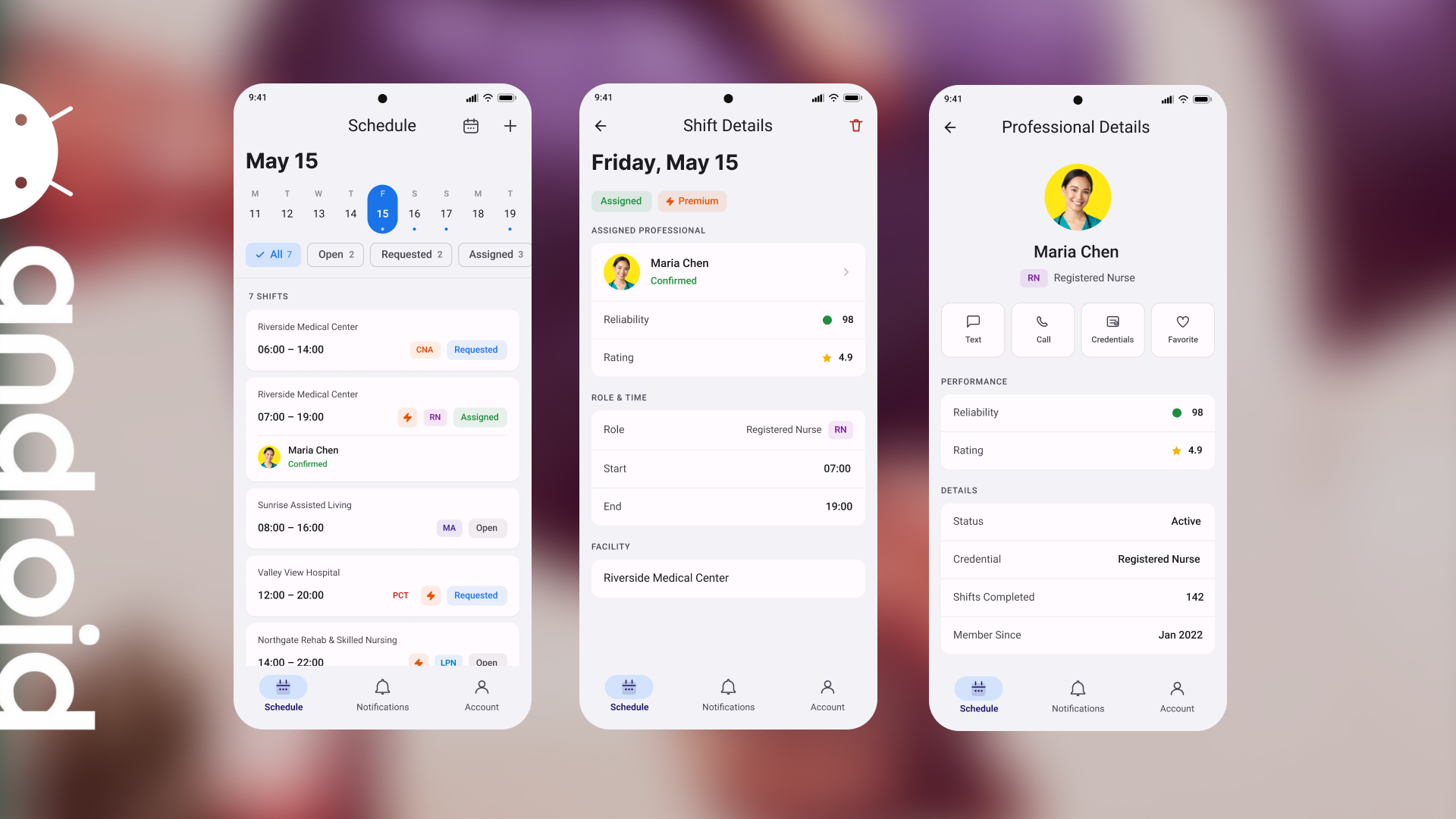
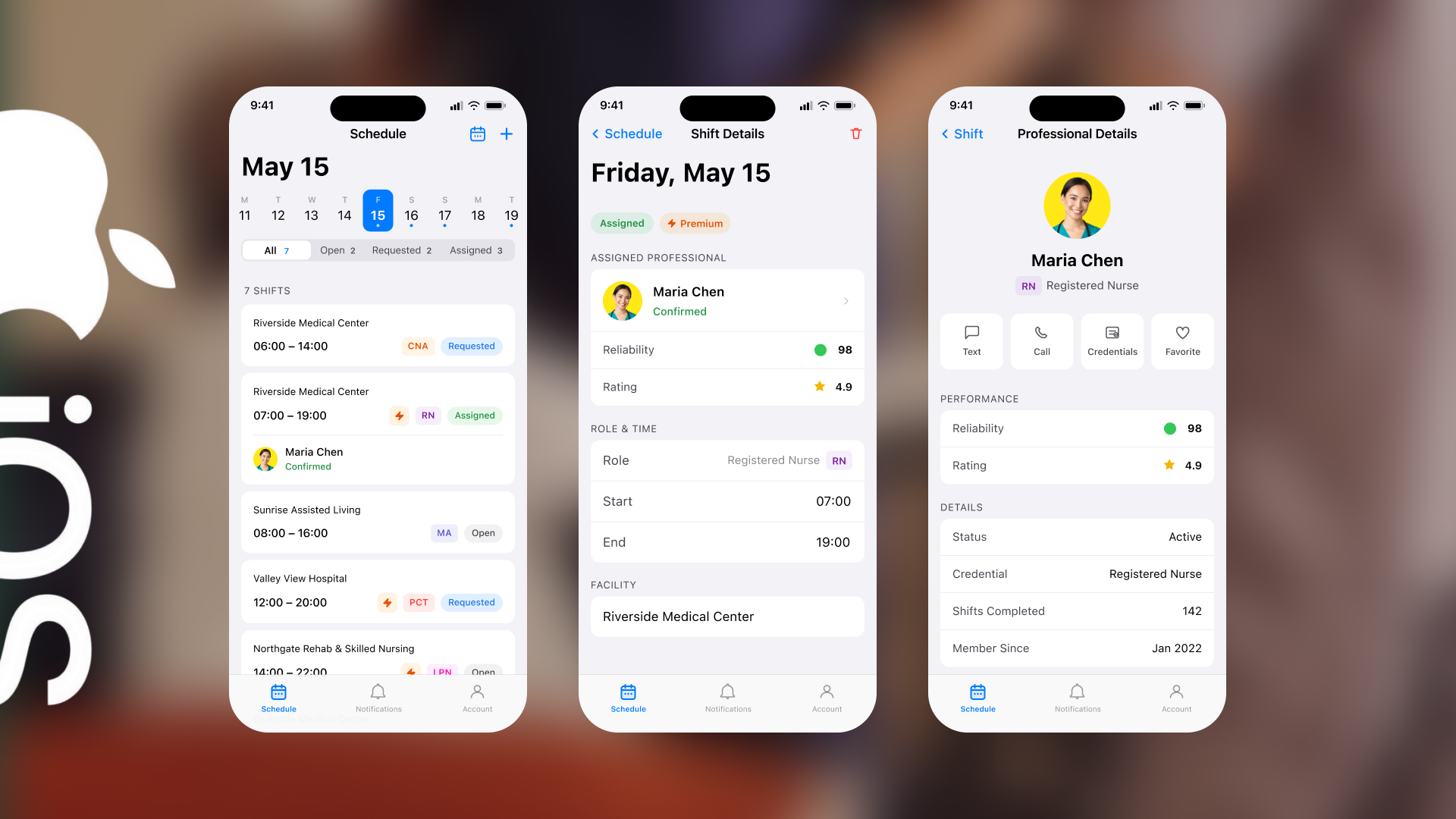
Mobile Experience Expansion
Led the design for ShiftKey’s first native iOS and Android applications for healthcare facility administrators, driving a major expansion in platform accessibility and operational responsiveness. This was a very intentional focusing and reduction of feature sets for the on-the-go user.
Optimized for:
- Mobility & Access: Enabled comprehensive, real-time shift management directly from mobile devices, untethering administrators from their desks.
- Operational Agility: Accelerated response times to sudden, critical staffing gaps to prevent understaffing.
- Contextual Flexibility: Empowered facilities with adaptable tools tailored specifically for high-pressure, on-the-move healthcare environments.

Impact & Outcomes
The combined set of product improvements resulted in measurable business and system-level impact:
Business Impact
- $5M+ net-new revenue impact
- +3% increase in shift-fill rates
- 13% reduction in marketplace cancellations
Product Impact
- First native mobile application launch for facility administrators
- Improved reliability and consistency across shift lifecycle workflows
- Increased efficiency in high-frequency staffing operations
- Reduced friction in critical decision-making moments
Credits
Product Manager: Kellen Freeman
Engineering Manager: Piotr (Urson) Żełudziewicz
Research Director: Collin Pfender
Design Leadership: Laura Rillera(VP) Ryan Collins(Director)
Sr Co-designer: Jolee Evans
Jr Co-designer: David Hawks
Figma Design System: Derek Viars
Brand Design: Lizy Ainsworth
Wider Design Team: Chelsea Parkinson, Karolina Wronska, Tamar Medina, Preston Boyden, Merida Elizondo
Principal Android Engineer: Vicson Victor
Android Engineering: Adrianna Kaczor, Slawomir Onyszko
Principal iOS Engineer: Brady Miller
Web Engineering Team: Szymon Zak, Rafał Głowacz, Jonothan Szwarc, Wojciech Brychcy, Michal Jarosz, Pawel Mieleszkiewicz
QA: Lukasz Kalinowski, Anna Kopachova, Mateusz Olejniczak, Aleksandra Galuska
Marketing: Amy Arani, Amanda Davis
Legal: Regan Parker, Aurora Kaiser
CTO: Thomas Fredell
CEO: Mike Vitek